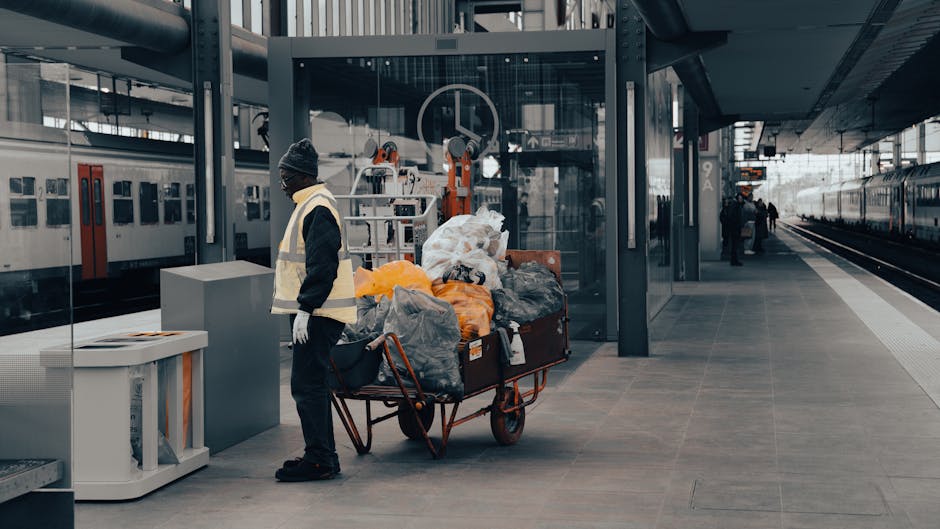
Emergency rubbish clearance St Albans City Station: fast, careful help when waste can't wait
If rubbish has piled up suddenly near St Albans City Station, you probably want one thing: a quick, calm fix without hassle. Maybe it's a tenant move gone wrong, a sudden office clear-out, broken furniture blocking access, or builders' debris that needs shifting before the next day starts. Whatever the cause, Emergency rubbish clearance St Albans City Station is about restoring order fast, safely, and with as little disruption as possible.
In practice, the best emergency clearance is not just "arrive quickly and load everything up." It means knowing what can be removed, how to deal with awkward access, how to separate reusable items from true waste, and how to keep the job tidy enough that you can breathe again afterwards. That matters a lot around a busy transport location where time, access, and cleanliness all count.
This guide explains how emergency rubbish clearance works, who it suits, what to expect, and how to avoid the common mistakes that slow people down. You'll also find a checklist, comparison table, and practical advice on safe disposal, compliance, and getting a genuinely useful service rather than a rushed bodge job. Let's get into it.
Why Emergency rubbish clearance St Albans City Station Matters
Emergency waste problems have a habit of becoming bigger, faster than you'd like. Around a station area, that can mean blocked entrances, trip hazards, unpleasant smells, or rubbish attracting attention at exactly the wrong time. In our experience, the issue is rarely just the waste itself; it's the pressure it creates. You may have staff waiting, a lease deadline, a landlord inspection, or visitors arriving the next morning.
Speed matters, but so does judgement. A pile of mixed rubbish outside a property may look straightforward, yet it can hide awkward items such as old electronics, plasterboard, damp cardboard, broken glass, or a fridge that needs separate handling. One bad lift and the whole thing becomes slower and riskier. Who wants that at 7am before the station gets busy?
There's also the reputational side. If you're running a business, managing a flat, or handling a property, a mess left sitting outside sends the wrong signal. A prompt clearance keeps the place usable and helps you avoid complaints from neighbours, passers-by, or building management. Truth be told, a clean reset is often as valuable as the physical removal itself.
For many people, emergency clearance is also about reducing stress. The visual clutter alone can make a room feel smaller, noisier, and more chaotic. Clear the space, and everything feels more manageable again. It sounds simple, because it is. But the way it's done makes all the difference.
How Emergency rubbish clearance St Albans City Station Works
Emergency rubbish clearance usually begins with a quick description of the problem: what needs removing, where it is, whether access is easy, and how soon it needs to happen. A good provider will then estimate the labour, vehicle size, and time required. If the load includes mixed materials, they may ask a few follow-up questions so they can plan properly. That small bit of preparation prevents a lot of fuss later.
The process often follows a simple pattern:
- You explain the situation and identify the items that need clearing.
- The team assesses access such as stairs, narrow hallways, loading points, or parking restrictions.
- A price or estimate is provided based on volume, weight, item type, and urgency.
- The team arrives promptly and begins sorting, lifting, and loading.
- Waste is separated responsibly for reuse, recycling, or disposal.
- The area is swept through so you are left with a usable space rather than a half-finished job.
That last step is easy to overlook, but it matters. A station-side job can involve dust, grit, packaging, or splinters that need clearing after the main items are gone. Nobody wants to drag rubbish out fast only to leave behind nails, cardboard strips, or bits of broken trim.
For larger jobs, it can help to review related services beforehand. For example, if the pile includes business waste, the team may point you towards business waste removal, while bulky household items may fit better with house clearance or home clearance. If the issue is specifically furniture, then furniture clearance or furniture disposal can be the cleaner route.
Key Benefits and Practical Advantages
The biggest benefit is obvious: the waste disappears quickly. But that's only part of the story. Emergency clearance brings a few practical wins that are easy to underestimate until you need them.
- Fast restoration of access so doorways, corridors, storage rooms, and shared areas can be used again.
- Reduced safety risk from broken items, loose bags, sharp edges, or unstable stacks.
- Less disruption for neighbours, tenants, customers, and staff.
- Better waste handling when items need sorting rather than simply dumping.
- More time saved compared with trying to manage multiple trips yourself.
There is also a quiet advantage in having one team handle the lot. If you are dealing with bins full of mixed materials, old shelving, packaging, and the odd item that has no obvious home, a coordinated clearance is usually much smoother than several small attempts. It avoids that classic problem where you start with good intentions and end up with rubbish in three different corners. Not ideal.
If you're comparing options, it can help to look at the wider service mix too. Some situations are better handled with waste removal, while larger property jobs may need flat clearance, loft clearance, or garage clearance. Matching the service to the job is one of the simplest ways to keep costs and delays under control.
Expert summary: In an emergency, the best rubbish clearance service is not just fast; it is organised, safe, and clear about what happens next. Speed without structure usually creates a second problem.
Who This Is For and When It Makes Sense
Emergency rubbish clearance near St Albans City Station makes sense when waste is causing immediate practical problems. That could be a one-off incident or a deadline-driven clear-out. The common thread is urgency.
Typical situations include:
- Landlords and letting agents needing a swift turnaround between occupancies.
- Businesses clearing stock, packaging, damaged furniture, or office clutter before opening hours.
- Homeowners dealing with a sudden pile-up after a move, delivery, or repair job.
- Builders and trades who need debris removed before work can continue.
- Property managers responding to complaints, access issues, or fire escape obstructions.
It also makes sense when the waste is unpleasant, heavy, or awkward. A sofa wedged in a hallway. Wet cardboard. Loose plaster. A fridge that has stopped working and started smelling worse by the hour. These are not jobs you want to leave until next week if you can help it. If the item list includes appliances, a dedicated option like fridge and appliance removal can be useful, especially where safe handling matters.
There are also cases where a more targeted service is the smarter move. For example, if the mess mainly consists of renovation debris, builders waste clearance is often more appropriate. If you are dealing with a sofa, mattress, or heavy upholstered item, then mattress and sofa disposal may be the better fit.
It's worth saying plainly: if the problem is dangerous, highly contaminated, or possibly hazardous, don't assume a normal rubbish collection will do. You need the right handling from the start.
Step-by-Step Guidance
If you need emergency clearance and want the smoothest possible result, follow a practical order rather than trying to solve everything at once. A little structure goes a long way here.
1. Identify exactly what needs removing
Start by listing the items and the rough volume. Are you looking at a few bulky items, or a full room's worth of mixed waste? Take a quick look for anything special: electronics, fridges, sharp metal, confidential paperwork, or anything damp and heavy. It only takes a few minutes, but it changes the plan.
2. Check access and timing
Can a vehicle stop nearby? Is there lift access? Do you need the work done before commuters arrive, after hours, or during a small window between appointments? Around station areas, timing can be as important as the clearance itself.
3. Separate urgent hazards from general waste
If there is broken glass, leaking liquid, or anything you suspect may be hazardous, isolate it. Do not mix it into an ordinary pile "just to be quicker." That's the sort of shortcut that causes delays later. For suspect materials, a specialist route such as hazardous waste disposal may be required.
4. Ask for a clear estimate
Request a breakdown that makes sense: what is included, whether labour is covered, whether recycling is part of the process, and whether there are any access-related costs. If you want to compare options properly, the pricing and quotes page is a useful place to understand how quotes are normally approached.
5. Prepare the space
Move small personal items out of the way, unlock access points, and make sure the team can work safely. If there is paperwork or confidential material mixed in, set it aside before the removal begins. It saves time and avoids awkward mistakes. For sensitive records, confidential shredding can be a sensible companion service.
6. Confirm the finish
After removal, check that the area is clear, swept, and safe. A reliable team should leave the site in a condition that is genuinely usable. If they've rushed the last bit, you'll notice it straight away. Dust underfoot, a bit of grit by the skirting, that odd clatter in the corner. You know the feeling.
Expert Tips for Better Results
Small decisions make a big difference in emergency jobs. A few experienced habits can save time, money, and a fair bit of frustration.
- Photograph the waste before collection. It helps with quoting and avoids confusion if the pile changes later.
- Group similar items together. Furniture with furniture, building debris with building debris, and so on.
- Keep a clear route. Hallways, stairs, and doorways should be free from trip hazards.
- Ask about reuse and recycling. Not everything should be treated as generic rubbish.
- Plan for access early. A service can be fast and still get slowed down by parking or loading issues.
Another practical tip: if you know there are bulky items involved, mention them directly. A sofa, wardrobe, or broken fridge changes the job more than a bag of mixed waste does. That sounds obvious, but people forget. Then the van arrives and everyone does the "oh, we also have this one thing..." routine. It happens more often than you'd think.
For example, if your clearance includes old seating or a stained mattress, use the relevant disposal route rather than forcing it into a generic job. The same goes for garden waste, garage clutter, or loft overflow. A targeted service can be quicker and neater, and sometimes cheaper too. If you need broader help, garden clearance, home clearance, or garage clearance may be a better fit.
Common Mistakes to Avoid
When people are under pressure, they often make the same avoidable errors. Most are easy to fix once you know what to watch for.
- Leaving everything mixed together. It slows sorting and may complicate disposal.
- Assuming every item can go in one load. Some waste needs separate handling.
- Forgetting access restrictions. Tight roads and limited parking can disrupt an otherwise simple job.
- Choosing only on speed. Fast is good, but not if the team cannot handle the actual waste properly.
- Not checking insurance or working practices. If something goes wrong, you want reassurance that the provider takes safety seriously.
One more mistake deserves its own mention: trying to "save time" by moving heavy rubbish yourself before help arrives. If it's awkward, sharp, wet, or unstable, leave it alone. A strained back will not make your day easier, and neither will a dropped item on a tiled floor. To be fair, some jobs look manageable until you actually lift them.
Tools, Resources and Recommendations
You do not need specialist equipment for every emergency clearance, but a few simple tools make the job easier and safer:
- Heavy-duty gloves for handling rough or dirty items.
- Tough sacks or boxes for loose mixed waste.
- Phone camera for recording the load before collection.
- Basic measuring tape if you need to estimate volume.
- Cleaning supplies for a final sweep or wipe-down afterwards.
On the provider side, good practice usually includes clear quotes, careful lifting, responsible sorting, and a sensible attitude to recycling. If you want a clearer picture of how a company approaches the job, their about us, insurance and safety, and recycling and sustainability pages can help you judge whether their standards fit what you need.
Payment clarity matters too, especially for urgent work. You want to know what happens before the job starts, not after everything is already on the truck. If you prefer to plan ahead, you may also want to use book online for a quicker start.
Law, Compliance, Standards, or Best Practice
Waste clearance in the UK should be handled responsibly, and that applies just as much in a rush as it does on a quiet Tuesday. The exact legal duties depend on the waste type and who produced it, so it is wise to stay cautious rather than guess. As a practical rule, waste should be transferred to a legitimate carrier and handled in a way that keeps people, property, and the environment safe.
For emergency rubbish clearance, the key best-practice points are straightforward:
- Do not mix suspect hazardous materials with general waste.
- Keep paths, exits, and access routes clear while work is underway.
- Separate confidential documents and sensitive items before loading.
- Use a provider that can explain how waste will be handled and where appropriate, recycled.
- Be careful with appliances, electrical items, and any item containing fluids or sharp components.
If your situation involves business waste, storage areas, or a commercial property near the station, standards around tidiness, access, and safety become even more important. A good clearance should reduce risk, not create it. That's the whole point, really.
Where uncertainty exists, the safest route is to ask questions early and keep the load simple. If an item looks odd, heavy, leaking, or potentially dangerous, say so before anyone lifts it.
Options, Methods, or Comparison Table
Not every rubbish problem needs the same fix. Sometimes emergency clearance is the right call; sometimes a more specific service is cleaner and more efficient. Here's a simple comparison.
| Option | Best for | Strengths | Watch out for |
|---|---|---|---|
| Emergency rubbish clearance | Urgent mixed waste, access problems, time-sensitive jobs | Fast response, flexible handling, less disruption | Needs clear description of waste and access |
| Waste removal | General mixed rubbish without complex item types | Simple and broad coverage | May not be ideal for specialist items |
| House or home clearance | Rooms, flats, full property clear-outs | Good for larger household jobs | May be more than you need for a small urgent pile |
| Furniture disposal | Sofas, chairs, tables, wardrobes | Efficient for bulky items | Less suitable for mixed builders' debris |
| Builders waste clearance | Renovation debris, offcuts, rubble, packaging | Tailored to construction materials | Should be separated from household rubbish where possible |
If you are unsure which route fits best, start by asking: is this mostly mixed rubbish, or is it mainly one kind of item? That one question usually narrows it down fast. It sounds simple because it is. And it saves a lot of back-and-forth.
Case Study or Real-World Example
Picture a weekday morning near St Albans City Station. A small office has had a last-minute storage clean-out before visitors arrive later in the day. There's a broken desk, several bags of shredded paper, a printer that no longer works, old packaging, and a couple of chairs that are too worn to keep. Nothing dramatic, but enough to make the room feel cramped and messy.
The team member in charge takes a few photos, checks that the corridor is clear, and confirms the lift access. They separate the shredded paper and paperwork from the furniture, because mixed loads are easier to manage when the categories are obvious. A clearance team arrives, loads the bulkier items first, then handles the smaller waste, and sweeps through the room at the end.
The result is not just a tidier office. It's a space that can actually be used again, without staff stepping around clutter or visitors seeing a half-finished mess. The whole thing is done before the afternoon rush. That is the kind of outcome people are usually hoping for, even if they don't say it out loud.
A different scenario might involve a flat close to the station where old furniture, a mattress, and a pile of box waste have built up after a move. In that case, a combined approach using mattress and sofa disposal alongside general clearance can be the neatest solution. The point is to match method to waste, not just tick a box.
Practical Checklist
Use this quick checklist before booking emergency clearance:
- Identify the main items and estimate the amount of waste.
- Check whether anything is broken, sharp, leaking, or possibly hazardous.
- Note access details: stairs, lift, parking, loading space, opening hours.
- Remove personal items, keys, cash, files, or anything sensitive from the area.
- Decide whether any items should be reused, recycled, or disposed of separately.
- Take a few photos for a clearer quote.
- Ask when the team can arrive and how long the job may take.
- Confirm payment expectations and what the service includes.
- Make sure someone responsible is available to show the waste and approve the work.
- Do a final walk-through after the clearance is complete.
If your situation involves larger household clutter, it may also be worth reviewing loft clearance or house clearance options. For office environments, office clearance can be more efficient than piecing together multiple small removals.
Conclusion
Emergency rubbish clearance St Albans City Station is really about control. When waste appears suddenly, blocks access, or starts causing stress, you need a calm and practical response that gets the space usable again without creating fresh problems. The best results come from clear information, sensible sorting, safe handling, and a provider that understands urgency without cutting corners.
Whether you are dealing with a one-off bulky item, a mixed pile of waste, or a more involved property clear-out, the smartest move is to match the service to the job and prepare the space properly. That saves time, reduces risk, and usually makes the whole thing feel far less painful than expected. Small win, but a real one.
If you're comparing your options, check the service pages that fit your situation, review pricing and safety details, and choose the route that gives you the cleanest finish as well as the fastest response.
Get a free quote today and see how much you can save.
And if today has been one of those messy, chaotic ones, that's alright. A clear space has a funny way of making the rest of the day feel possible again.
Frequently Asked Questions
What counts as emergency rubbish clearance near St Albans City Station?
It usually means waste that needs removing quickly because it is blocking access, creating a safety issue, causing complaints, or stopping work from continuing. The urgency is the key part.
How fast can emergency rubbish clearance be arranged?
That depends on the day, the size of the job, and access. Small, well-described jobs are usually easier to move quickly, especially if you can share photos and clear details up front.
Can you remove mixed household and office waste in one visit?
Often, yes. Mixed waste can usually be handled together if it is safe to do so, although certain items may need separate treatment. It helps to mention the mix before booking.
Do I need to sort everything before the team arrives?
No, not usually. But it does help to separate anything sensitive, hazardous, or especially valuable. Even a rough split between furniture, general rubbish, and paperwork makes the job easier.
What items should not be put into ordinary rubbish clearance?
Anything that may be hazardous, leaking, or dangerous should be flagged separately. That includes suspect chemicals, contaminated materials, and items that need specialist handling rather than a standard load.
Is emergency rubbish clearance more expensive than standard removal?
It can be, because the job often needs faster scheduling or extra labour. The best way to avoid surprises is to ask for a clear quote and explain the urgency honestly.
Can old furniture be taken away as part of an emergency clearance?
Yes, in many cases. Sofas, chairs, tables, and wardrobes are common emergency items, especially during moves or sudden property clean-outs.
What if the waste is in a flat or upstairs property?
That is common enough. Stairs, lifts, and narrow corridors just need to be factored into the plan. Clear access details help the team prepare properly and avoid delays.
Will the area be left tidy afterwards?
A proper clearance should include a basic tidy-up so the space is safe and usable. If the site is dusty or there is debris left behind, that's something to question before the team leaves.
Can confidential paperwork be handled during the same visit?
Often yes, but it is wise to separate documents clearly and tell the provider in advance. For sensitive material, confidential shredding is usually the safer route.
What should I do if I think something in the pile is hazardous?
Do not mix it into the general waste. Keep it separate and describe it clearly before booking. If needed, ask about a specialist hazardous waste disposal route instead.
How do I choose between rubbish clearance and a more specific service?
Look at the main type of waste. If it is mostly mixed rubbish, general clearance may fit. If it is mainly furniture, appliances, builders' debris, or household contents, a targeted service is usually more efficient.
Is there a way to make the booking process quicker?
Yes. Send photos, state the access conditions, list the main items, and explain how urgent it is. Those four things save a surprising amount of time and back-and-forth.
If you're ready to move forward, the most useful next step is to gather a few photos, note access details, and decide which type of clearance best matches the load. A tidy, fast solution is usually closer than it feels in the moment.